
As parents, teachers, and students look for the best methods to foster learning, social development, and life skills, the argument between homeschooling and formal schools has been intensifying in recent years. Every strategy has certain benefits and drawbacks, and the most effective one often relies on the lifestyle of the family, the child’s requirements, and the educational objectives. Although conventional schools have been the norm for many years, homeschooling has becoming more and more popular due to its adaptability to a child’s pace, flexibility, and individualized learning. Parents may choose the best course of action for their family by being aware of the advantages and disadvantages of each.
A organized atmosphere with predetermined curriculum, qualified instructors, and peer interactions is offered by traditional education. Its social component, which teaches kids how to collaborate with others, form friendships, and hone their interpersonal skills, is one of its best features. Students who engage with their peers on a daily basis are exposed to a variety of viewpoints and gain social confidence. In addition, schools provide extracurricular activities like clubs, athletics, and the arts, all of which are important for developing creativity, discipline, and collaboration. These experiences are crucial in helping young kids develop their personalities and become ready for collaborative work conditions in the future.
Traditional schools provide a well-defined academic framework with quantifiable development in addition to social advantages. Teachers get training on how to instruct, evaluate, and provide feedback to students. A child’s performance may be systematically tracked with the use of standardized testing, grading schemes, and frequent parent-teacher conferences. Additionally, schools expose pupils to a variety of disciplines that are often beyond the scope of what parents can educate at home. Specialized teachers often teach subjects like advanced mathematics, scientific laboratories, and foreign languages, providing pupils with resources and knowledge that might be difficult to duplicate in a homeschooling environment.
Traditional education does have several disadvantages, however. Sometimes the strict timetable and one-size-fits-all method are unable to accommodate each student’s particular learning preferences. While some kids could find it difficult to keep up with the class’s pace, others can get disinterested because the topic isn’t difficult enough. A teacher’s ability to provide each student with individualized attention may be limited by large class numbers, which might make some kids feel ignored. Furthermore, kids may experience stress due to the lengthy hours and structured curriculum, which also leaves little time for them to pursue creative or personal hobbies.
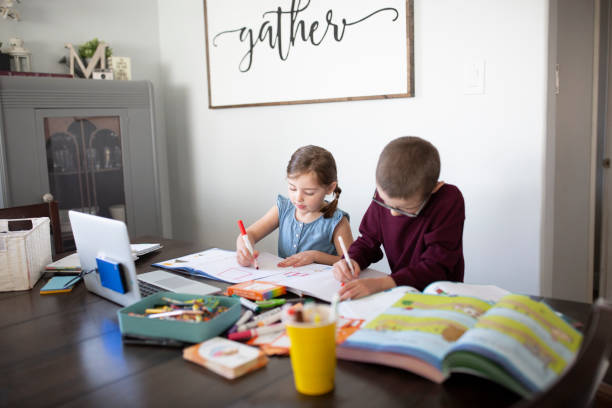
Conversely, homeschooling provides a degree of freedom that regular schools just cannot match. A curriculum may be created by parents based on their child’s interests, shortcomings, and talents. Students may study at their own speed with this individualized approach, devoting more time to areas they find challenging and moving more rapidly through content they understand. To make learning more interesting and applicable, homeschooling also allows families to include real-world experiences like field trips, museum visits, and practical projects.
The capacity to provide a secure and supportive learning environment is a major benefit of homeschooling. Peer pressure, bullying, and other harmful effects that might sometimes arise in conventional schools can be avoided by parents. Additionally, they may match the education to their family’s culture, values, or religious convictions, which is crucial for many families who want for their values to be reflected in the educational process. Furthermore, since parents and kids spend more time together and collaborate to accomplish learning objectives, homeschooling often improves family ties.
But there are drawbacks to homeschooling as well, which parents need to be ready to deal with. The absence of consistent social engagement with peers is one of the main issues. It still takes more work to make sure that kids learn good social skills, even while homeschooling families may participate in co-ops, neighborhood organizations, or extracurricular activities to provide social chances. Lesson preparation, instruction, and progress evaluation require a lot of time and effort from parents, which may be taxing, particularly if they have other job or family obligations.
Another thing to think about is resource accessibility. Homeschooling families may need to spend more money on extra resources, online courses, or tutors for more difficult topics, even if regular schools have libraries, science laboratories, sports facilities, and qualified professors. Depending on how it is organized, homeschooling may have a broad range of costs. Parents also need to have faith in their own abilities to direct their child’s education or seek outside assistance when necessary.
College and job preparation is another facet of the conflict between homeschooling and formal education. The transition may go more smoothly in traditional schools because they often provide guidance counselors, college readiness courses, and established routes to higher education. However, if parents take initiative, homeschoolers are not at a disadvantage. Nowadays, a lot of universities accept portfolios, alternative transcripts, or test results in lieu of regular school records since they understand the benefits of homeschooling. Indeed, according to some research, homeschooled children often do well in college because of the strong independent study abilities and self-discipline they acquired while in school.
The child’s personality also influences the choice between standard education and homeschooling. Some kids do best in an organized, social setting where they may interact with a wide range of individuals on a regular basis, compete, and work together. Others may do better in a more relaxed, calm environment where they can concentrate intently without being distracted by the bustle of a classroom. When deciding on the ideal educational strategy, parents must take into account their child’s temperament, learning preferences, and emotional requirements.
Recognizing that homeschooling and formal education are not mutually exclusive is also crucial. Some families combine aspects of both strategies in a mixed approach. during instance, parents may decide to homeschool their children during the early years before switching to formal education for high school, or a kid may attend traditional school part-time while finishing certain courses at home. As online learning has grown in popularity, hybrid models have become more widely available, giving families even more control over their children’s education.
There is no one-size-fits-all solution to the debate over whether homeschooling or formal education is superior. Both approaches have advantages and disadvantages, and the “better” choice will rely on the child’s requirements as well as the family’s situation. While homeschooling gives freedom, individuality, and the chance to design a customized educational path, traditional schooling offers structure, resources, and socializing built in. The most important thing is to make sure the approach selected fosters a lifetime love of learning while promoting the child’s intellectual, emotional, and social development.
Ultimately, education is about how it happens as much as where it occurs. The quality of education, the promotion of curiosity, and the acquisition of lifelong skills and values are what really count, whether a kid is studying at home or in a conventional classroom. Since the ultimate objective is to help their kid attain their full potential in whichever method best fits them, parents should concentrate on striking the balance that will best support their child’s development and happiness.