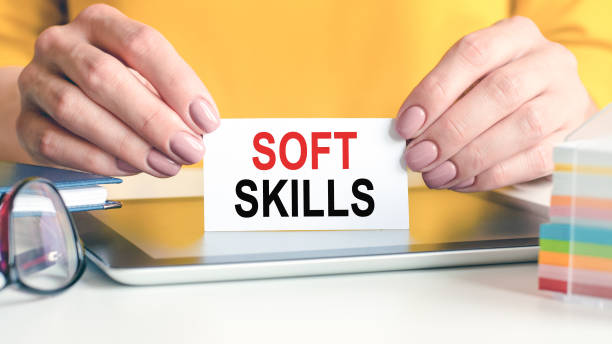

A degree is no longer the only measure of success in the ever evolving world of today. Even if formal education offers useful information and technical know-how, a person’s ability to advance in both their professional and personal lives is often determined by their soft skills. Skills like communication, flexibility, emotional intelligence, and problem-solving are more important than ever, according to employers in a variety of sectors. These abilities influence how individuals collaborate with others, deal with difficulties, and support a group or organization, yet they are not often taught in a classroom. Since soft skills have a direct influence on how well someone utilizes their knowledge in practical settings, they often overshadow the value of a degree.
Communication is one of the most important soft skills. It may open doors in any industry if you can listen intently, communicate your thoughts effectively, and modify your message for various audiences. If they are unable to successfully communicate their ideas or work with others, even the most qualified expert will find it difficult to have an influence. Understanding people, interpreting nonverbal clues, and crafting meaningful conversations are all components of effective communication, which goes beyond just speaking. Additionally, it fosters mutual respect and trust, which facilitates teamwork and the development of enduring professional bonds.
Emotional intelligence and communication are closely related. Recognizing and controlling your own emotions as well as comprehending and feeling other people’s emotions are both components of emotional intelligence. It facilitates dispute resolution, enhances cooperation, and fosters a pleasant atmosphere at work. Employees with emotional intelligence are often better at managing stress and preserving a positive work-life balance, and leaders with this ability are more likely to inspire and encourage their teams. Strong emotional intelligence makes it easier for a person to handle challenging social circumstances, which is often more useful than just technical understanding.
Another soft talent that has grown in significance in the fast-paced world of today is adaptability. Because of globalization, technology, and shifting consumer needs, industries are changing swiftly. Regardless of their academic credentials, someone who is inflexible and resistant to learning new things might quickly become out of date. However, someone who welcomes change, picks up new skills, and modifies their strategy when necessary will always be relevant. Teams benefit from the resilience that adaptable people provide, which keeps businesses competitive even in unpredictable times.
Another soft talent that goes beyond what a degree can provide is problem-solving. Although education imparts ideas and frameworks, there are often no easy answers to challenges in the actual world. Analyzing events, determining the underlying reasons, and developing novel solutions all need critical thinking, creativity, and ingenuity. People who can address problems calmly and analytically, as opposed to frantically or while waiting for orders, are valued by employers. Because they provide direction and clarity in difficult circumstances, strong problem-solvers become preferred individuals in companies.
Collaboration and teamwork are also essential soft skills that have an impact. Nowadays, very few occupations can be completed alone, regardless of a person’s level of skill. It is essential to be able to collaborate well with individuals from a variety of backgrounds, respect differing opinions, and support group objectives. Team players contribute to the development of a positive and effective atmosphere, which enhances performance as a whole. Collaboration also entails humility, the capacity to take criticism, and the readiness to make concessions for the sake of others—qualities that are crucial for sustained success but cannot be quantified.
Organizational and time management abilities are equally crucial. Academic achievement is often the emphasis of degrees, but the workplace needs more than knowledge—it also requires the capacity to effectively manage workloads, prioritize activities, and meet deadlines. An effective time manager lowers stress, boosts output, and wins the respect of superiors and coworkers. Additionally, organization demonstrates dependability, which is a highly regarded quality in any line of work.
Soft skills like networking and relationship-building may lead to possibilities that a degree by itself cannot provide. Developing a network of connections, keeping up a positive reputation, and establishing sincere professional relationships may result in partnerships, mentoring, and career advancement. Because others like working with them, people who are likable and accessible often draw possibilities. This ability is directly related to interpersonal skills and social awareness, both of which facilitate the development of deep bonds.
Cultural understanding is another important soft talent that is often disregarded. It is commonplace in today’s increasingly international workplace to engage with individuals from various origins and cultures. Skills that improve cooperation and avoid misunderstandings include practicing inclusion, being aware of and respectful of cultural differences, and being sensitive to other points of view. Being culturally intelligent increases your professional versatility and value, particularly in global corporations.
Even on a personal level, leadership is a soft talent that extends beyond team management. Being a leader means taking charge, being responsible, motivating others, and leading by example. Being accountable for your job, inspiring your colleagues, and stepping up when necessary are all examples of leadership traits that don’t need a management position. Regardless of educational background, these qualities are what make people stand out.
Long-term success also heavily depends on resilience and stress management. No matter how competent a person is, they will undoubtedly encounter obstacles and disappointments in their professional life. How people react is what counts. When faced with challenges, resilient people remain composed, grow from setbacks, and overcome them. They execute without letting criticism or worry get in the way. Although no degree can provide this emotional power, it is one of the most highly regarded traits in the uncertain workplaces of today.
Another soft talent that might be worth more than a degree is a development mentality. Growth-minded people think that skills can be improved by work, criticism, and education. They see setbacks as chances to do better rather than as irreversible. People with this perspective grow both personally and professionally, becoming more creative and adaptive. People that are keen to learn and develop are valued by employers because they provide new ideas and stay current throughout time.
Although a degree might lead to your initial chance, your future success is determined by these soft talents. In every position, they are what enable you to forge connections, adjust to change, overcome obstacles, and leave a lasting impression. Employers place a high priority on abilities like empathy, communication, and resilience because they understand that although information can be taught, these traits are more difficult to cultivate.
Soft skills, which are distinctively human, will become increasingly more important in a future where many technical duties are being replaced by automation and artificial intelligence. Although machines are capable of processing data, they are unable to motivate a team, establish trust, or handle delicate social situations. Soft skills are thus more than simply an addition to formal education; they are often the decisive element in both personal and professional success.
Therefore, although obtaining a degree is a noteworthy accomplishment, spending time honing soft skills is just as crucial. They will enable you to succeed in all facets of your life, not just your work. Any credential on paper can never be as strong as the capacity to connect with others, adjust to change, and face obstacles with a resilient and upbeat attitude.