
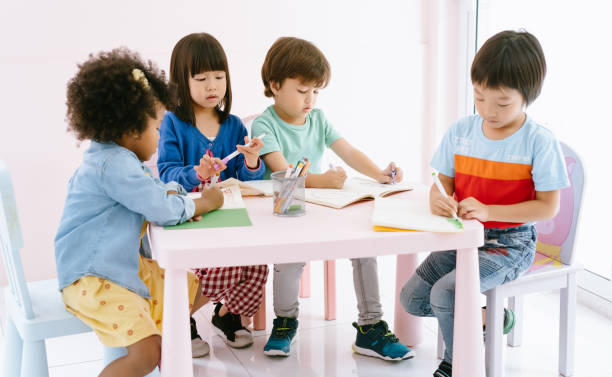

One of the most important things a youngster can learn is how to be creative since it fosters critical thinking, problem-solving, and self-expression. Young students are naturally curious and imaginative, but in order for their creativity to thrive, they need the proper setting and support. Giving kids the opportunity to explore, think creatively, and come up with original methods to convey their thoughts is a better approach to encourage their creativity than pressuring them to become artists or innovators. In the rapidly changing world of today, when creativity is highly prized, fostering children’s creative thinking from a young age sets them up for success in school as well as for resilience and flexibility throughout their lives.
Giving young students opportunity for unstructured play is one of the easiest methods to foster their creativity. Children are allowed to explore and make their own designs when they are given toys or materials—like building blocks, clay, painting supplies, or recycled materials—that don’t have a single correct method to utilize them. Open-ended play gives children the freedom to think for themselves, make choices, and learn by making mistakes, in contrast to controlled activities with predetermined rules or results. Children benefit from this kind of play because it helps them develop their imagination and experience the world in a variety of ways.
Asking open-ended questions encourages original thought as well. Parents and educators may ask questions like “What else could we use this for?” “How would you solve this problem differently?” or “What would happen if…?” rather than ones that have clear-cut answers like “What color is this?” or “What is two plus two?” These kinds of inquiries inspire kids to consider other viewpoints and go beyond previously learned material. A child’s confidence to express more imaginative ideas is increased when adults show genuine interest in their ideas.
Giving kids the time and space to pursue their hobbies is another crucial element in encouraging creativity. Children can lack the free time necessary for autonomous projects or creative play due to a hectic schedule full of prescribed lectures, homework, and extracurricular activities. Children may participate in activities that pique their interest, such as storytelling, constructing, sketching, or just thinking, by allocating unstructured time each day. When there is no pressure to accomplish a certain outcome, creativity often flourishes during times of introspection and self-directed discovery.
Children may also find their own strengths by being encouraged to express themselves creatively in a variety of ways. While some people love writing, dancing, singing, or hands-on constructing, others may prefer painting or sketching. Giving kids a range of creative outlets enables them to try new things and discover what appeals to them. In order to facilitate children’s spontaneous creation, schools and parents might provide a setting where painting supplies, musical instruments, books, and craft materials are easily accessible. The concept that creativity may take many forms and that there is no one “correct” way to be creative is reinforced by celebrating all kinds of expression, regardless of how straightforward or abstract they may be.
Establishing an atmosphere in which making errors is accepted as a normal aspect of learning is equally crucial. Children are reluctant to attempt new things or take chances with their ideas because they are afraid of making mistakes. Adults may educate children that creativity is about the process rather than simply the end result by accepting errors as chances to grow and learn. For instance, rather of critiquing a child’s artwork if it doesn’t work out, parents and instructors might ask them what they learned or what they can try differently the next time. This method promotes experimentation and persistence, two qualities that are critical to the development of creativity.
Storytelling and reading are effective means of fostering creativity. Children learn to look beyond their current experiences and create new worlds when they are exposed to a variety of tales, whether via books, movies, or oral storytelling. Children may be inspired to create their own tales by talking about characters, storylines, and possible outcomes. They may engage in enjoyable and entertaining imaginative play by being encouraged to create their own stories or even change the conclusion of well-known stories.
Young learners’ creativity may also be enhanced via peer collaboration. Children may learn from one other’s viewpoints when they collaborate on group projects, construct something as a team, or discuss ideas in a classroom. Their own thinking is expanded when they see how several individuals might tackle the same issue in novel ways. Children learn the importance of collaboration, active listening, and combining abilities to produce something even greater than they might on their own when they exchange ideas in a nurturing setting.
When utilized properly, technology may also be a tool for encouraging creativity. Children may express themselves creatively in new ways with the help of apps and digital tools for storytelling, animation, music creation, and sketching. However, because children’s creativity flourishes when they fully engage their senses and connect with their surroundings, it’s crucial to strike a balance between screen time and hands-on activities and real-world exploration. Technology should support active creative play rather than take the place of it as excessive passive screen time may stifle creativity.
Young students are also much inspired by nature. Curiosity and creative thinking may be sparked by outdoor pursuits including park exploration, animal observation, gardening, and gathering natural materials for art projects. Children have many opportunity to explore nature, ask questions, identify patterns, and develop original answers. Additionally, stress reduction from being outdoors might help people think more creatively and cleanse their minds.
Children’s perceptions of their own skills are greatly influenced by adults’ views regarding creativity. Children learn that creativity is valued when parents and educators provide an example of curiosity, experimentation, and a willingness to try new things. The belief that the process of producing is more important than the final product is reinforced when the effort is praised instead of merely the result. Children have greater ownership of their work and are encouraged to address obstacles in their own special ways when too strict rules are avoided and flexibility in job completion is allowed.
Lastly, developing confidence is a key component in encouraging creativity. Youngsters are more inclined to express their opinions and take imaginative chances when they feel respected, protected, and encouraged. Giving children encouraging remarks, acknowledging little accomplishments, and expressing gratitude for their uniqueness encourages kids to believe in their own creative abilities. With time, this self-assurance develops into a mentality that allows people to openly express themselves and explore new concepts.
With the correct support and chances, creativity is a talent that can be cultivated rather than a set attribute. Parents and teachers may assist young students in realizing their full creative potential by fostering an atmosphere that encourages inquiry, experimentation, and self-expression. These abilities go well beyond play and the arts; they set the stage for future creativity, problem-solving, and flexibility. One of the most potent gifts we can offer the next generation in a world that is always changing is creativity, which will enable them to meet obstacles with confidence and ingenuity.